|

With a flat lagoon, daily onshore winds, constant sun and water temperatures in the twenties you"d expect the description to continue "often crowded, make sure you get to the beach before noon to be sure of space on the water" … but the reality is that you"ll rarely find more than a couple of local riders out, even at the height of the season. The kite surfing phenomenon has yet to reach the East African coast in any major way, as we discovered on our 3-week trip to escape the cold, harsh North Sea winter.
 Flying into Mombasa, Kenya"s second city and major sea port, gave us a harsh introduction to the different style of life in this part of the world. A few minutes into the descent towards the airport, the plane suddenly started a steep, noisy dive into clouds, and only at the last minute as the town lights appeared nearby through the window did we pull up again as the pilot decided that it was too late to attempt a landing with so much speed. We went around again and tried from the other end of the runway, eventually pulling off a rather sketchy arrival onto African soil. "Animals on the runway", we were told. It seems that getting around Kenya by any mode of transport involves placing your life totally in the hands of God, and driving is more like a glorified dodgem car game than a civilised journey from A to B. Flying into Mombasa, Kenya"s second city and major sea port, gave us a harsh introduction to the different style of life in this part of the world. A few minutes into the descent towards the airport, the plane suddenly started a steep, noisy dive into clouds, and only at the last minute as the town lights appeared nearby through the window did we pull up again as the pilot decided that it was too late to attempt a landing with so much speed. We went around again and tried from the other end of the runway, eventually pulling off a rather sketchy arrival onto African soil. "Animals on the runway", we were told. It seems that getting around Kenya by any mode of transport involves placing your life totally in the hands of God, and driving is more like a glorified dodgem car game than a civilised journey from A to B.
 After getting over the shock of the heat blast that welcomes us as we step off the plane onto the tarmac (it"s 11pm, too), we all pile into a friend"s Land Rover and head up the coast to a little village where we are to be based for our stay at the Coast. After getting over the shock of the heat blast that welcomes us as we step off the plane onto the tarmac (it"s 11pm, too), we all pile into a friend"s Land Rover and head up the coast to a little village where we are to be based for our stay at the Coast.
 The next morning dawns warm and humid with the sun blasting through the coconut fronds and cicadas having it to the max in the bushes around the house. No wind, but our host Roger Tanner explains that "the wind picks up as regularly as clockwork around mid day, growing through the afternoon and dying in the evening". It"s late December and we are in the middle of what"s known as the NE monsoon season. Trade winds, known locally as Kaskazi, blow every day without fail from the North East, which is between cross- and cross-onshore all the way up and down the Kenya coast. The next morning dawns warm and humid with the sun blasting through the coconut fronds and cicadas having it to the max in the bushes around the house. No wind, but our host Roger Tanner explains that "the wind picks up as regularly as clockwork around mid day, growing through the afternoon and dying in the evening". It"s late December and we are in the middle of what"s known as the NE monsoon season. Trade winds, known locally as Kaskazi, blow every day without fail from the North East, which is between cross- and cross-onshore all the way up and down the Kenya coast.
 Sure enough the wind arrives after a lazy lunch, so we pump up and hit the water. Jon and Rich are on a mission to stay upwind this trip, and the conditions are ideal for improving. The East African coast is protected by a barrier reef running from Mozambique up to Somalia, sometimes as far out as 2km, coming all the way into land in some places. This gives a beautiful flat water playground in which to boost out the latest moves you"ve been trying at home. The water is crystal clear, so much so that coral heads skimming past, 3 metres below, still scare the poop out of you. It"s warm, and never drops below 20 degrees at any time of year, so you can safely leave your wetsuit at home! Even after plastering ourselves with factor 30 sun block we came away with sunburnt skin in places - be careful - the sun here is as beastly as it gets… Sure enough the wind arrives after a lazy lunch, so we pump up and hit the water. Jon and Rich are on a mission to stay upwind this trip, and the conditions are ideal for improving. The East African coast is protected by a barrier reef running from Mozambique up to Somalia, sometimes as far out as 2km, coming all the way into land in some places. This gives a beautiful flat water playground in which to boost out the latest moves you"ve been trying at home. The water is crystal clear, so much so that coral heads skimming past, 3 metres below, still scare the poop out of you. It"s warm, and never drops below 20 degrees at any time of year, so you can safely leave your wetsuit at home! Even after plastering ourselves with factor 30 sun block we came away with sunburnt skin in places - be careful - the sun here is as beastly as it gets…
 The swell was pumping overhead on the outside reef, but with no rescue boat and viciously sharp coral in the shallow impact zone, we thought it better not to risk it. The swell was pumping overhead on the outside reef, but with no rescue boat and viciously sharp coral in the shallow impact zone, we thought it better not to risk it.
 Over the next few days we explore up and down the coast; driving north for an hour or so is a spot called Watamu, where Earnest Hemmingway wrote his novel "The Old Man and the Sea". After wowing the local kids with our huge kites and crazy water antics we stop for a bite to eat at Ocean Sports, one of Kenya"s bases for the deep sea fishing boats that take you out way beyond the reef for a day or more to catch a marlin or swordfish. An hour further north is a town called Malindi, there"s a kite surf centre here, but we didn"t have time stop and visit. XXX km north again is Che Shale, a large, open sandy bay with a gap in the reef where the swell busts through to give a beach break at high tide. There"s another kite school here, one of the first on the coast, get in touch with Justin if you want to go up and check it out. Over the next few days we explore up and down the coast; driving north for an hour or so is a spot called Watamu, where Earnest Hemmingway wrote his novel "The Old Man and the Sea". After wowing the local kids with our huge kites and crazy water antics we stop for a bite to eat at Ocean Sports, one of Kenya"s bases for the deep sea fishing boats that take you out way beyond the reef for a day or more to catch a marlin or swordfish. An hour further north is a town called Malindi, there"s a kite surf centre here, but we didn"t have time stop and visit. XXX km north again is Che Shale, a large, open sandy bay with a gap in the reef where the swell busts through to give a beach break at high tide. There"s another kite school here, one of the first on the coast, get in touch with Justin if you want to go up and check it out.
 The tides make a large difference to both the wind strength and suitability of places to kite surf… some areas inside the reef dry out completely at low tide, whereas others still hold enough water all the time. Beware - the water can get shallow and there are nasty urchins in many spots. Unless you"re confident you"re not going to need to walk around in the water, wear tough wetsuit boots to save yourself the urchin spine extrication hassle that Jon had to cope with on numerous days! The tides make a large difference to both the wind strength and suitability of places to kite surf… some areas inside the reef dry out completely at low tide, whereas others still hold enough water all the time. Beware - the water can get shallow and there are nasty urchins in many spots. Unless you"re confident you"re not going to need to walk around in the water, wear tough wetsuit boots to save yourself the urchin spine extrication hassle that Jon had to cope with on numerous days!
After a few days exploring we head back to our local kite beach at Nyali, 10 minutes north of Mombasa. We turn up mid-morning, and maybe head out for some snorkelling or maybe just sit around under the palms and draw patterns in the powdery white sand. A few of our gang headed out on a glass-bottomed boat to see the huge variety of colourful tropical fish out on the reef - this costs around 1,000 Kenya Shillings (~ £8). The notice board in the local water sports centre, Pro-Surf, proudly lists the weather as sunny, sunny, sunny, sunny, sunny and yes, sunny again, non-stop so far for the first half of January. The wind in the afternoon ranges from 12 to 20+ knots; it"s hot, so not as powerful as what we are used to back in the UK; we flew kites between 13m and 17m during the 3 weeks we were there, and only had a few days where the wind didn"t quite give us enough love for a good session.

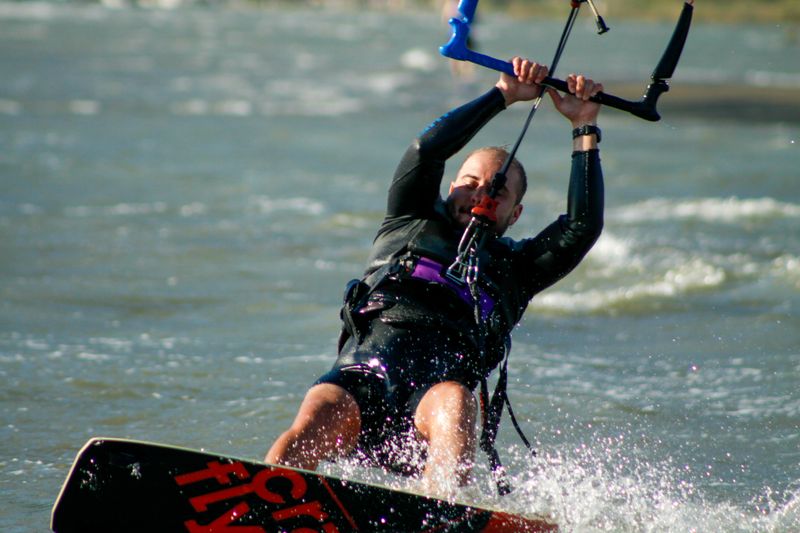
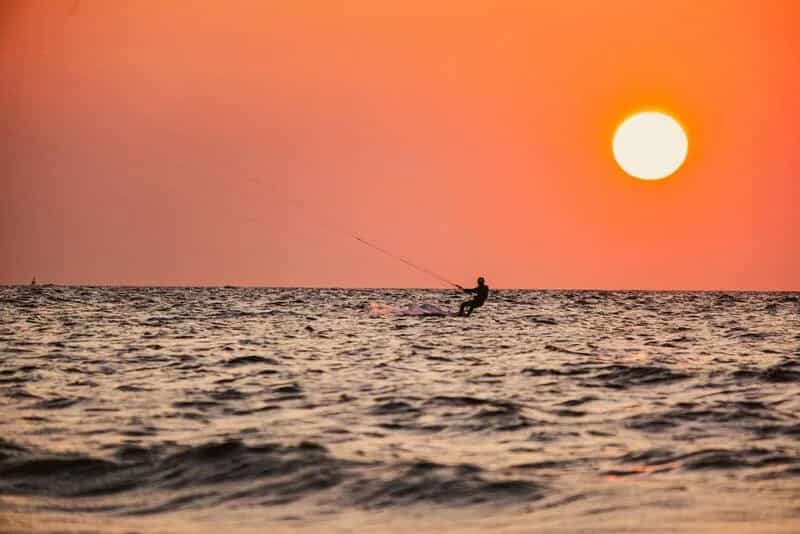
Chris spent one afternoon hanging desperately onto his smallest kite on the trip, a 13m Fuel, flying around with the whole lagoon to himself, only coming in to shore as the sun went down over the coconut trees, when the ghost crabs come out to scavenge on the water"s edge. Jon, Nick and Rich went from zero to hero in the space of a few days, keeping up wind without trouble, a testament to the excellent learning conditions here and of course bags of natural talent… Rose was busting out some sweet jumps on her 13m, in front of a crowd of astonished local kids on the beach, every evening we were buzzing, stoked to be kiting in paradise.
 There"s plenty to do on calmer days and in the mornings, quite apart from eating huge amounts of juicy, fresh fruit and checking out the incredible natural ecology along the coast and in the sea. Wander round the old town of Mombasa and the 16th Century Portuguese Fort Jesus, or visit the miracle nature park revived from disused quarries at Bamburi/Haller park just north of the city, where you can see everything from hippo to giraffe and giant tortoises. There"s plenty to do on calmer days and in the mornings, quite apart from eating huge amounts of juicy, fresh fruit and checking out the incredible natural ecology along the coast and in the sea. Wander round the old town of Mombasa and the 16th Century Portuguese Fort Jesus, or visit the miracle nature park revived from disused quarries at Bamburi/Haller park just north of the city, where you can see everything from hippo to giraffe and giant tortoises.
 If you feel like a longer break from the water, take some time off inland. We headed up to Nairobi to join the overland truck safari organised by GameTrackers travelling the deserted northern districts of Kenya. This was an 8-day trip of incredible arid landscapes, tortuous bumpy tracks and numerous man-eating bugs, the final destination being the huge inland sea of lake Turkana, where the wind blows up to 30 knots every day over jade green water infested with crocodiles. We didn"t have our kites, but we"ll be back! If you feel like a longer break from the water, take some time off inland. We headed up to Nairobi to join the overland truck safari organised by GameTrackers travelling the deserted northern districts of Kenya. This was an 8-day trip of incredible arid landscapes, tortuous bumpy tracks and numerous man-eating bugs, the final destination being the huge inland sea of lake Turkana, where the wind blows up to 30 knots every day over jade green water infested with crocodiles. We didn"t have our kites, but we"ll be back!
We had a few more days back down at the coast to wash the dust off and blow the spiders out of our ragged hair, but by this time we were too laid back to explore south of Mombasa to other known kite spots like Tiwi and Diani. Travelling on the local minibuses, Matatus, is really cheap which makes it easy to get around and experience the friendly and colourful lifestyle the locals lead. There are street bars and beach bars open late into the night, and the price of food and drinks is low.
 Getting there Getting there
Flights to the capital city, Nairobi, from major UK airports range from about £400 upwards, and you can usually get a domestic flight to Mombasa included for not much extra. From Bristol and Manchester, fly KLM through Amsterdam - KLM is partnered with Kenya Airways so often gives the best deals. Avoid flying between the 10th of December and Christmas - this is peak period and expensive!
 When to go When to go
November to March is when the North-East trade winds blow, it"s warm and consistent. March to June is a rainy season and from June to September the South-East trade winds blow. These are generally stronger, up to 35 knots, but the weather is stormy and quite often wet at night.
Where to stay
Pro-Surf at Nyali and Extreme-Safari at Che-Shale operate an all-inclusive package, otherwise you can stay at any number of tourist hotels along the coast. There are also self-catering cottages up and down the coast, and also one or two cheaper hostels in the town of Mombasa.
Where to ride
If you can, plan your trip so that the tide is rising during the afternoon. There"s more wind, and you won"t have the danger of kiting on a falling tide. Spots where there"s enough water at all times include: Nyali, Watamu, Malindi, Che Shale, Tiwi, Diani.
 Nasties Nasties
- Sun. It"s well harsh - take at least factor 30 sun block, a long sleeve rashie and sunglasses you can wear in the water.
- Sea urchins. These are unfortunately everywhere, so unless you"re dead good and don"t ever touch the bottom, wear wetsuit boots.
- Disease; the whole coast is malarial, so talk to your doctor about what to take. Cover up in the evening with long trousers and sleeves, and go heavy on the anti-mosquito spray. Also consider typhoid, rabies and hepatitis jabs … it is the tropics!
Money and travel
The currency is Kenya Shillings, at the moment it"s about 130 KShs to the UK pound. A beer at a bar will cost you around 100/=.
Safety
Kenya is a safe country to visit as long as you deploy your common sense. Don"t walk around with valuables on show, in fact it"s best to leave your watch and phone at home - take a real holiday! Mobile phone coverage in Kenya is excellent, however. The medical system involves paying first and claiming on insurance later.
| 
 papa·17 jan 2006 · 10 min lezenpapa · 17 jan 2006 · 10 min